Container Questions Kenya — Complete FAQ Guide 2026 (30+ Questions)
After years of helping Kenyan buyers find the right container for their project, we have collected and answered the most common questions people ask before buying. This mega FAQ covers everything — from how much a container costs, to whether container homes are legal, to how long they last, to how to get electricity and water connected. If you do not find your answer here, call us on 0715 557 559 and we will answer it directly.
Need an exact quote? Call us now.
We answer container questions 24/7.
General Container Questions
What exactly is a shipping container? A shipping container is a standardised steel box originally designed for transporting goods by sea, rail, and road. They are built to ISO (International Organization for Standardization) standards, meaning they are dimensionally consistent and structurally engineered to stack six high fully loaded. This engineering makes them extraordinarily strong, durable, and versatile for non-shipping applications including homes, offices, shops, and storage.
How long does a shipping container last? A well-maintained shipping container lasts 25–30+ years in active shipping use. When repurposed for static use (storage, building), the structural lifespan is effectively indefinite with proper maintenance — the main enemy being surface rust. Regular repainting every 5–10 years and keeping moisture away from the base are the two most important maintenance activities.
Are shipping containers waterproof? A Wind and Watertight (WWT) or better container is designed to be completely weatherproof — no water ingress through the walls, roof, or floor seams. Door seals (rubber gaskets) prevent rain entry through the doors. Standard containers handle even heavy tropical rainfall without leaking. The floor is marine-grade hardwood designed to withstand cargo moisture.
What is the standard container colour? Containers arrive in various colours from shipping companies — RAL 7035 grey and white are common, as are the corporate colours of shipping lines (Maersk blue, MSC orange, etc.). For building projects, most buyers paint their containers to match their design scheme. Exterior-grade metal paint or Hammerite-type rust inhibitor paint is recommended.
Can a container withstand Kenya's climate? Yes. Shipping containers are designed for tropical, equatorial, and maritime conditions worldwide. Kenya's mix of heat, UV exposure, tropical rain, and humidity is well within the container's design parameters. Coastal locations (Mombasa, Kilifi) accelerate surface rust due to salt air — annual anti-rust treatment is recommended in coastal areas.
Container Prices & Buying Questions
How much does a container cost in Kenya in 2026? Prices range from Kshs 140,000 (used 20ft as-is) to Kshs 2,500,000+ (new 40ft reefer). The most popular container for homes — a used 40ft High Cube food grade WWT — costs Kshs 360,000–440,000. A used 20ft WWT for storage costs Kshs 160,000–220,000. Call 0715 557 559 for today's exact prices.
What does "WWT" mean on a container? WWT stands for Wind and Watertight. It is a condition certification confirming the container has no holes or broken seams — it keeps out wind and rain. Surface rust and cosmetic dents are acceptable in WWT grade. This is the recommended minimum standard for any outdoor storage, shop, office, or home use.
What is a one-trip container? A one-trip (or new) container has been used for a single shipping voyage from its manufacturing location (usually China) to Kenya. It arrives in near-perfect condition — original paint, pristine floors, no rust. It costs approximately 40–60% more than a used WWT container.
Is it better to buy new or used? For most applications — storage, shops, offices, and homes — a quality used container in WWT or food grade condition is better value. The savings over a new container (Kshs 150,000–250,000 on a 40ft HC) are substantial and the functional difference for most uses is minimal. Buy new when hygiene certifications are required (pharmaceuticals, premium food), or for a high-end residential project where the premium appearance matters.
Can I negotiate the price of a container in Kenya? There is modest room for negotiation, particularly when buying multiple units. Cash buyers may negotiate a small discount. However, our listed prices already reflect competitive market rates — we do not inflate prices expecting large discounts.
What is the difference between 20ft and 40ft containers? A 40ft container is exactly double the length of a 20ft with the same width. The 20ft has 13.9 sq.m of floor area and the 40ft has 28.3 sq.m. The 40ft costs approximately 1.8–2.2× the price of a comparable 20ft.
Container Homes Questions
Is a container home cheaper than a conventional house in Kenya? Yes, typically by 20–40% for comparable quality. A fully finished 2-bedroom container home costs Kshs 900,000–1,500,000. A comparable conventionally built 2-bedroom house in peri-urban Kenya costs Kshs 1,500,000–2,500,000. The savings are largest for buyers who manage the conversion process efficiently.
Is a container home legal in Kenya? Yes, container homes are legal in Kenya. They are subject to the same county planning and building regulations as any permanent structure. You need county Development Permission (building approval) for any container used as a dwelling. Without this approval, you risk a demolition order. With proper approval and an Occupation Certificate, a container home is 100% legal.
How hot does a container get in Kenya's climate? An uninsulated container in Kenya's sun can reach 55–70°C inside during peak afternoon hours — extremely hot and uninhabitable. However, with proper insulation (50–75 mm spray foam or rockwool), a light-coloured exterior, roof shade structure, and adequate ventilation or air conditioning, container homes are perfectly comfortable. Insulation is non-negotiable for any habitable container in Kenya.
How many people can live in a 40ft container home? A single well-designed 40ft High Cube container (28 sq.m floor area) comfortably houses a couple or a small family of 2–3 people. Two containers provide 56 sq.m — comfortable for a family of 4–5. The key is thoughtful space planning — every square metre must be designed purposefully.
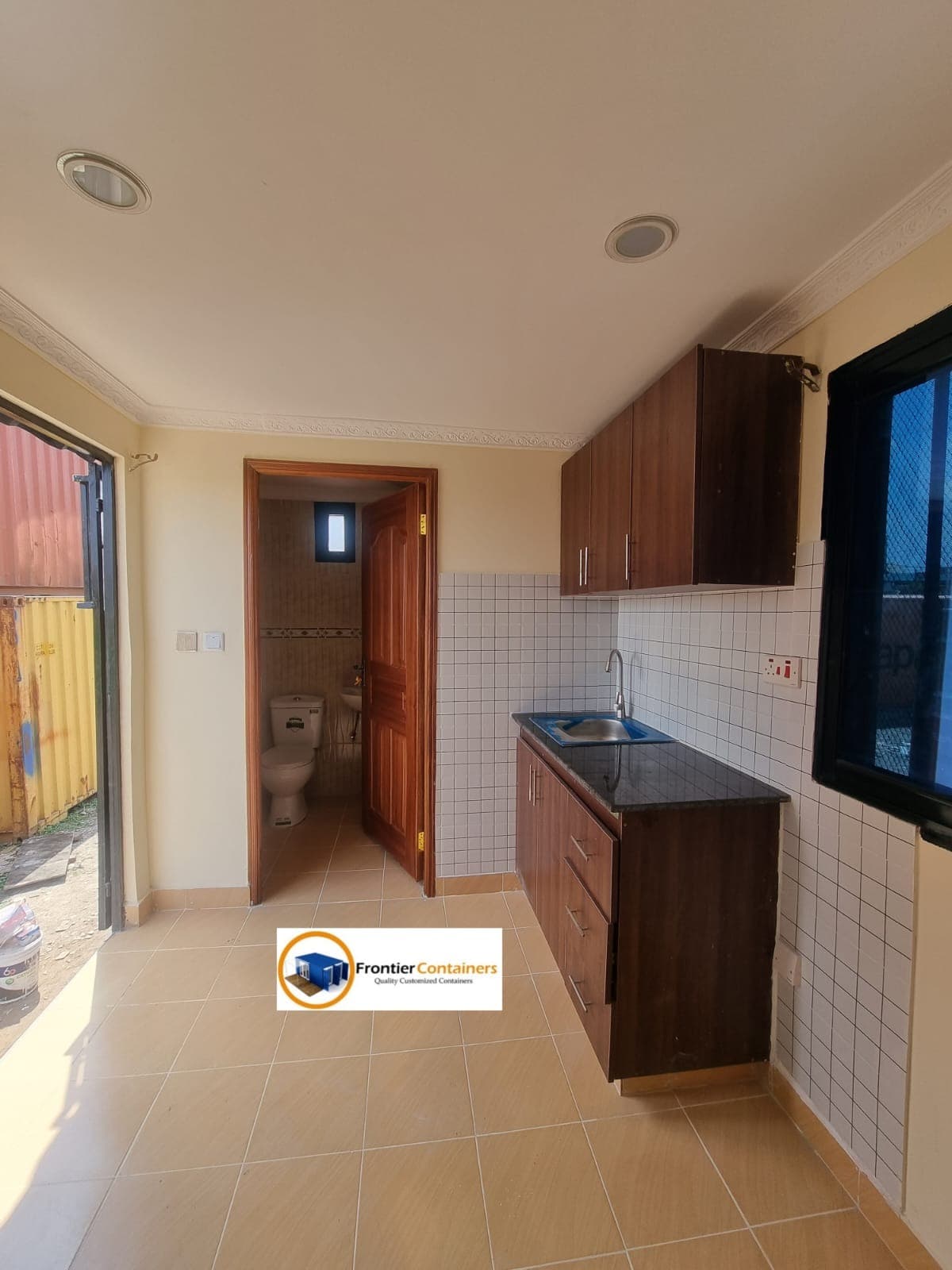
How long does it take to build a container home in Kenya? A basic container home conversion takes 4–8 weeks from container delivery to occupancy. A full high-end conversion with custom kitchen, tiling, and quality finishes can take 3–6 months. The speed advantage over conventional construction (which takes 12–24 months for a comparable house) is one of the major appeals of container homes.
Can you connect a container home to electricity and water in Kenya? Yes. Container homes are connected to Kenya Power and county water supply in exactly the same way as conventional buildings. You need an EPRA-registered electrician for electrical installation and connection, and approval from your county water utility for the water connection. Both are routine processes.
Can you get a mortgage for a container home in Kenya? Yes, some Kenyan banks and Saccos will finance container home projects. Saccos (particularly development loans) are often the best option with rates of 12–15% per annum. For bank financing, you need an approved title deed, county-approved plans, and NCA-registered contractor documentation. See our Container Home Financing guide for full details.
Container Shops & Commercial Use Questions
Is a container shop profitable in Kenya? Very much so. Container shops have lower capital cost than conventional brick-and-mortar premises, can be relocated if business requires, and can be set up in high-foot-traffic locations where permanent construction is not feasible. Many successful container shops, salons, M-Pesa agents, and kiosks operate across Kenya.
What business licences does a container shop need? A container shop requires the same licences as any business premises: a county Single Business Permit (renewed annually), food handling permit (if selling food), and any sector-specific licences relevant to your business type. The building itself also requires county Development Permission if it is a permanent conversion.
How big is a 20ft container shop? A 20ft container provides approximately 14 square metres of floor area. With good shelving, a service counter, and efficient layout, this fits a retail boutique, beauty salon, phone accessories shop, M-Pesa kiosk, or small hardware store comfortably.
Can I run power to a container shop? Yes. Kenya Power will connect a container shop to the grid in the same way as any business premises. You need a licensed electrician to install the internal wiring and a connection application to Kenya Power. For off-grid locations, a small solar system (800W–2kW) is sufficient for lighting, charging, and small appliances.
How do I secure a container shop after hours? Container shops are inherently more secure than traditional structure shops due to the steel walls. Most container shops use: the original container lock bars (highly secure), a hasp and padlock system, roller shutter doors (the most popular commercial option), and for high-value premises, a secondary internal padlock.
Delivery & Site Questions
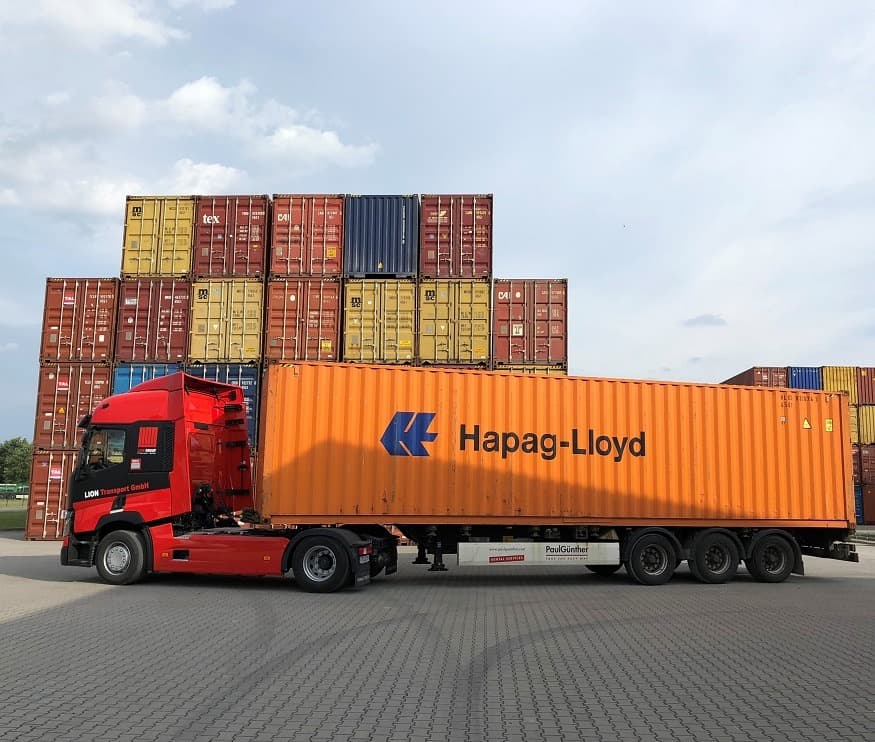
How is a container delivered in Kenya? Containers are delivered using tilt-bed trucks (which slide the container off at ground level) or crane trucks (which lift and place the container precisely). Our delivery trucks are self-loading — you do not need to hire a separate crane. The driver calls you 2–3 hours before arrival.
What road access does a container delivery need? For a 20ft container: minimum 3–4 metres wide road and 4.5 metres overhead clearance. For a 40ft container: minimum 4–5 metres wide road, 4.8 metres overhead clearance, and 15–18 metre turning radius. The truck plus 40ft container is over 20 metres long.
Can you deliver to my county? Yes. We deliver across Kenya — Nairobi, Mombasa, Kisumu, Nakuru, Eldoret, Nyeri, Meru, Machakos, and all major counties. We assess the route for access suitability before confirming delivery to challenging locations.
How long before delivery should I prepare my site? Begin site preparation at least 2–3 weeks before your planned delivery date. Foundation concrete needs 7–14 days to cure before the container is placed. Ensure the access route is clear of obstructions before the delivery day.
Do I need to be present for container delivery? Yes. You or a trusted representative must be on site throughout delivery to direct placement and sign the delivery receipt. Inspect the container condition before the driver leaves — note any damage on the delivery document.
What if my gate is too narrow for the delivery truck? Measure your gate width against the truck's requirements (minimum 3 metres for a 20ft delivery). If your gate is narrower, you may need to temporarily remove gate posts or use a smaller vehicle for the container drop. Call us to discuss your specific access situation before booking.
Costs & Financing Questions
What is the total cost of a container home project in Kenya? A complete 2-bedroom container home (1 × 40ft HC) typically costs Kshs 900,000–1,500,000 all-in, including container, delivery, foundation, conversion, electrics, plumbing, and finishes. A budget version costs Kshs 700,000–900,000. A premium version with high-end finishes costs Kshs 1,500,000–2,500,000.
What extra costs should I budget for when buying a container? Budget for: delivery (Kshs 15,000–140,000 depending on location), foundation (Kshs 50,000–300,000), modification/conversion works (Kshs 150,000–800,000+), permits and professional fees (Kshs 80,000–250,000), and utility connections (Kshs 50,000–200,000). The container purchase price is often just 25–40% of the total project cost.
Does Frontier offer payment plans? Yes. We require a 30% deposit to confirm and reserve your container, with the 70% balance due on delivery day. For multi-unit orders, we can discuss staged milestone payment arrangements. Contact us to discuss your project.
Can I get a Sacco loan for a container home? Yes. Sacco development loans are one of the best financing options for container homes in Kenya, with rates of 12–15% per annum and more flexible security requirements than commercial banks. Most Saccos with development loan products will fund container home projects with approved plans and contractor documentation.
How does Fuliza and KCB M-Pesa compare to Sacco loans for container homes? Mobile credit products (Fuliza, KCB M-Pesa) are useful for small, urgent bridging needs — paying a fundis deposit, buying materials urgently — but are too expensive (high interest rates) for primary financing of a container project. Use them tactically for small amounts, and Sacco or bank finance for the main project cost.
Legal & Planning Questions
Do I need a permit to place a container on my land in Kenya? For a pure storage container (unmodified), generally no. For any container used as a home, office, shop, or other occupied or public-access space, yes — you need county Development Permission. Building without permission risks a demolition order. See our Container Permits guide for the full process.
Can a container home be resold or mortgaged in Kenya? Yes, provided it has an Occupation Certificate from the county. Without this certificate, selling or mortgaging the property is increasingly difficult as Kenya's land registry becomes more stringent. Always obtain proper approvals for any permanent container structure.
What is the minimum plot size for a container home in Kenya? County planning regulations set minimum plot sizes for residential development. In Nairobi, a 1/8 acre (500 sq.m) plot can accommodate a single container home within setback requirements. Smaller plots may be constrained by setback rules. In rural areas, plot sizes are less restrictive. Consult your county's Physical Planning department for zoning requirements.
Does Nairobi City County allow container homes? Yes, Nairobi County permits container homes. They are treated as any other permanent structure under the county's building by-laws. You need approved architectural drawings, a structural engineer's report, and county Development Permission before construction. Several container homes have received full county approval in Nairobi.
Can a container be used as a permanent home on agricultural land in Kenya? Agricultural land is zoned primarily for farming use. Change of use from agricultural to residential requires a specific change-of-use application to the county and relevant land authorities. In practice, many rural container homes exist on agricultural land without formal change-of-use, but this carries long-term legal risk for title security. Consult a land lawyer for your specific situation.
Do I need NCA (National Construction Authority) involvement for a container project? For any construction project in Kenya, contractors must be NCA-registered. For projects above Kshs 5,000,000 total value, NCA project registration is required. For most individual container home projects, the main requirement is to use NCA-registered contractors and maintain proper documentation.
Frequently Asked Questions
What is Frontier Containers EA Limited?+
Frontier Containers EA Limited is Kenya's leading container supplier, based in Nairobi. We supply new and used shipping containers across Kenya for storage, homes, offices, shops, schools, and commercial uses. We also offer container modifications, delivery across Kenya, and consultation on container projects. Call us on 0715 557 559.
Where is Frontier Containers located?+
Our main yard is in Nairobi, with access to container stock from Mombasa port. We deliver across Kenya. Visit our contact page for our physical address, or call 0715 557 559 to arrange a yard visit.
How quickly can I get a container after ordering?+
For most Nairobi deliveries, we can deliver within 2–5 business days of confirmed payment. Upcountry deliveries take 5–10 business days depending on location and route logistics. For urgent requirements, call us to check same-week availability.
Does Frontier Containers do container modifications?+
Yes. We offer container modification services including window and door cutting, insulation, interior lining, electrical installation, plumbing, roller shutter doors, and full residential conversions. Contact us with your project requirements for a conversion quote.
Can I visit and inspect containers before buying?+
Absolutely. We encourage buyers to visit our yard and inspect the specific container before purchase — especially for higher-value or food grade units. Call 0715 557 559 to arrange a yard visit at a convenient time.
Ready to Buy?
Call or WhatsApp us for pricing on any container product in Kenya.
Related Guides
Container Guides & Insights
Expert advice on prices, buying, and building with shipping containers across Kenya.
 24 May 2025
How Much is the Cost of Used Shipping Container in Kenya
Are you thinking about buying a used shipping container in Kenya? It’s a smart move for many needs, from storage to building unique spaces. But the first question on everyone’s mind is: “How much will it cost?” Read on to find out.
Read Article 24 May 2025
How Much is the Price for a 40ft Shipping Container in Kenya?
Are you looking to buy a 40ft shipping container in Kenya? This is a popular choice for many projects, from big storage needs to building spacious container homes or offices. One of the first questions people ask is about the price.
Read Article 2 June 2025
How much does a container home cost in Kenya?
Dreaming of a unique, affordable, and stylish home in Kenya? A container home could be your answer! Shipping containers are strong, eco-friendly, and can be transformed into beautiful living spaces. But how much does a container home cost in Kenya?
Read Article