Container Permits in Kenya — NCA, County & Planning Approvals Guide 2026
One of the most common questions we get from container buyers in Kenya is: 'Do I need a permit to place a container on my land?' The honest answer is: it depends on what you plan to use the container for, how long it will stay, and where you are located. This guide cuts through the confusion and explains exactly which approvals apply to container projects in Kenya — from a simple storage unit to a multi-unit container home development — with a step-by-step process, county-specific notes, and realistic cost estimates.
Need an exact quote? Call us now.
We answer container questions 24/7.
When Do You Need a Permit for a Container in Kenya?
Not every container placement requires a formal permit, but permanent or habitable uses almost always do. Here is a clear framework:
No permit typically required: - A container placed on your own private land purely for goods storage, not as a building - Temporary site offices on construction sites (covered by the main building permit) - Containers used in active shipping or logistics yards with existing operational licences
Permits are required for: - Any container converted into a habitable dwelling (home, servant quarters, guest room) - Container offices, shops, and commercial spaces — especially if the public has access - Container schools, clinics, or community facilities - Any container structure that is permanent or intended to stay beyond a few months - Container buildings in urban/peri-urban areas with active county enforcement - Multi-container developments of any type
The key legal question: Once you modify a container — by cutting windows, installing a door, adding plumbing, insulation, or electrics — it transitions legally from a movable chattel (like a vehicle) into a structure or building. At that point, county building regulations apply in the same way they would apply to a brick-and-mortar building.
The practical reality in Kenya is that enforcement varies significantly by county — Nairobi County enforces actively; some rural counties are more lenient. However, non-compliant structures face risk of demolition orders, and selling or mortgaging unpermitted property is increasingly difficult as Kenya's land registry systems modernise.
County Physical Planning Approval (Development Permission)
The primary approval for any permanent container structure in Kenya is a Development Permission from your county government's department of Physical Planning or Land Use Planning.
What it covers: Development permission confirms that your planned container structure: - Conforms to the zoning of your land (residential, commercial, agricultural) - Meets setback requirements (minimum distance from plot boundaries and roads) - Is consistent with the area's development plans and density limits - Meets minimum floor area, window, and ventilation standards
Who processes it: Your county government. In Nairobi County, this is the City County of Nairobi Physical Planning department. In other counties, it is typically the County Director of Physical Planning.
Documents typically required: - Application form (obtained from county offices) - Title deed or lease agreement for the land - Survey plan of the plot (from a licensed surveyor) - Architectural drawings showing the container layout, dimensions, floor plan, elevations - Site plan showing the container position on the plot with setbacks marked - Structural engineer's drawings and calculations (for permanent homes) - ID copy of the applicant and/or company registration documents
Process: Submit documents → Technical review by physical planning officers (4–12 weeks) → Approval with conditions or rejection with reasons → Pay approval fees → Collect development permission certificate.
Costs: County development permission fees vary but are typically: - Kshs 5,000 – 15,000 for small residential structures - Kshs 15,000 – 50,000 for commercial structures depending on county and floor area - Architect's and structural engineer's fees: Kshs 50,000 – 200,000+ depending on project complexity
NCA (National Construction Authority) Requirements
The National Construction Authority (NCA) regulates the construction industry in Kenya under the National Construction Authority Act, 2011. NCA requirements apply whenever you engage contractors for building work — including container conversions.
NCA Contractor Registration: Any contractor you hire for container modification or construction work should be registered with NCA. Using an unregistered contractor exposes you to liability and can jeopardise insurance claims. Verify your contractor's NCA registration number at nca.go.ke.
NCA Project Registration: For construction projects above a certain value (currently Kshs 5,000,000 and above), the project must be registered with NCA before construction begins. Most individual container home projects fall below this threshold, but larger commercial or multi-unit container developments may need NCA project registration.
NCA Levy: Registered NCA projects pay a levy of 0.5% of the project value to NCA.
Why NCA compliance matters: - County building inspectors increasingly request NCA-registered contractor certificates during inspection - NCA registration provides recourse if a contractor absconds or delivers defective work - Insurance companies are beginning to require NCA-registered contractors for building insurance policies
Practical steps for container homebuilders: 1. Ask your contractor for their NCA registration certificate (Category NCA 5–8 for residential works) 2. Verify the registration at nca.go.ke 3. Ensure the contract is in writing — NCA standard contracts are available 4. Keep all receipts and invoices for materials and labour
NEMA Environmental Approvals
The National Environment Management Authority (NEMA) under the Environmental Management and Coordination Act (EMCA) requires an Environmental Impact Assessment (EIA) for certain categories of development.
When NEMA approval is required: For most small container homes and shops, NEMA approval is not required. NEMA approvals become relevant for: - Developments on more than 0.5 hectares of land - Projects involving significant earthworks or vegetation clearing - Container developments near rivers, wetlands, or protected forest areas - Commercial projects with potential significant environmental impact (industrial processing, fuel storage, large hospitality) - Projects in Environmental Sensitive Areas (ESAs) as designated by NEMA
What the NEMA process involves: - Engagement of a licensed EIA Lead Expert - Project Report (for smaller projects) or full EIA Study (for larger ones) - Public participation process - NEMA review and approval - Cost: Kshs 80,000 – 500,000+ for an EIA depending on project size and complexity
For most container home buyers: If you are building a residential container home on a standard quarter-acre plot, NEMA approval is generally not required. If in doubt, consult a NEMA-registered EIA expert — an initial consultation typically costs Kshs 10,000 – 25,000 and will tell you definitively whether your project requires EIA.
Public Health & Other Sector Permits
Depending on the end use of your container, additional sector-specific approvals may be needed:
County Public Health — Food Handling Premises: Any container used for food preparation, sale, or storage as a food business must be inspected and approved by the county public health department. This applies to: - Container restaurants, cafes, and canteens - Container supermarkets and food shops - Container butcheries and bakeries
Requirements typically include: proper ventilation, hand-washing facilities, pest-proof structure, food-safe surface finishes, and separation of food preparation and sanitation areas.
Cost: Public health inspection fee Kshs 2,000 – 10,000 per year depending on county and business size.
County Public Health — Ablution/Sanitation Facilities: Containers converted into toilets or bathroom facilities require public health approval, particularly for schools, commercial premises, and public spaces.
Kenya Power — Electrical Connection: Any permanent electrical connection must be installed by a licensed electrician and inspected before Kenya Power will connect the supply. An electrical installation certificate (from a licensed inspector registered with the Energy and Petroleum Regulatory Authority - EPRA) may be required.
Water & Sewerage — NAIROBI WATER / County Water Utilities: Permanent plumbing connections to municipal water supply and sewer require approval from the relevant county water utility.
County Business Permit: Any container used for commercial business requires a county business permit (Single Business Permit) renewed annually. This is a standard business requirement, not specific to containers.
Step-by-Step Approval Process for a Container Home in Kenya
Here is a practical step-by-step process for obtaining all necessary approvals for a container home project in most Kenyan counties:
Step 1: Engage an architect and structural engineer This is the essential first step. Architects and structural engineers who have experience with container projects will design your structure and prepare the drawings required for all subsequent approvals. Many approval processes will not proceed without professional drawings.
Step 2: Apply for Development Permission at the county Submit architectural drawings, structural drawings, site plan, title deed, and application form to your county's Physical Planning department. Pay the application fee. Await technical review (4–12 weeks typical in Nairobi; faster in smaller counties).
Step 3: Obtain structural inspection approval (NCA/County) Some counties inspect structural work at foundation stage and superstructure stage before approving occupation. Confirm your specific county's inspection process.
Step 4: Commission works with an NCA-registered contractor Once you have Development Permission, procure your container and begin conversion works with an NCA-registered contractor. Keep all receipts.
Step 5: Obtain electrical inspection certificate (EPRA) On completion of electrical works, commission an EPRA-registered inspector to certify the installation. Present this to Kenya Power for connection.
Step 6: Apply for water/sewer connection (if applicable) Apply to your county water utility for water supply and sewer connection approval.
Step 7: Apply for occupation certificate Once construction is complete, the county building inspectorate will conduct a final inspection and issue an Occupation Certificate (or Certificate of Completion). This document proves your structure is legally compliant — important for mortgage, sale, and insurance.
Step 8: County business permit (if commercial) If using the container for business, apply for a Single Business Permit from the county.
Total timeline: Allow 3–6 months from design to occupation certificate for a standard container home in Nairobi County. Smaller counties may process faster.
County Differences — Nairobi vs Other Counties
Permit requirements and enforcement intensity vary meaningfully across Kenya's 47 counties:
Nairobi County: The most actively enforced county. Physical planning, building inspectorate, and public health departments all operate with reasonable regularity. Getting proper approvals in Nairobi is not optional for any permanent structure — demolition orders are issued. Fees are higher than other counties.
Mombasa County: Active enforcement, particularly for tourism and commercial developments. Coastal building regulations include specific setback requirements from the high-water mark and protected coastal zones.
Kisumu County: Moderate enforcement. Residential container homes in peri-urban areas are increasingly being approved. Fees are lower than Nairobi.
Nakuru & Upcountry Counties: Generally less enforcement-intensive for rural residential projects. However, this is changing as counties modernise their planning departments. Obtaining approval even in rural areas is recommended for long-term property security.
Key principle: Do not assume that because your neighbour built without permits that you will face no consequences. Planning enforcement in Kenya is erratic — some areas go years without enforcement then experience a crackdown. Obtaining proper approvals is always the better long-term strategy.
Container Permits & Approvals Cost Guide — Kenya 2026
Indicative costs. Actual fees vary by county and project size. Consult your county planning office for current fee schedules.
💡 These are indicative ranges. Call us for your exact quote: 0715 557 559
Frequently Asked Questions
Do I need a permit to place a container on my land in Kenya?+
For a pure storage container (unmodified, no windows or doors added, no habitation), a permit is generally not required in most Kenyan counties. Once you convert the container into a habitable or commercial space by adding windows, doors, insulation, and plumbing, it becomes a structure legally — and county Development Permission is required.
What happens if I build a container home without a permit in Kenya?+
You risk a county government stop-work order or demolition order, which is both costly and distressing. Without an Occupation Certificate, you cannot legally mortgage, sell, or let the property. You also have limited legal recourse if a contractor does substandard work on an unpermitted structure.
How long does it take to get a container building permit in Kenya?+
Development Permission processing time varies by county. In Nairobi County, expect 8–16 weeks with complete documentation. Smaller counties may process in 4–8 weeks. Incomplete applications cause significant delays — engage a professional architect from the start to ensure your submission is complete.
Does a container office at my business premises need a permit?+
Yes. A container office accessible to employees or clients is a workplace structure subject to county planning and public health requirements. The same applies to container shops and retail spaces. You will need Development Permission and a Single Business Permit (county business licence).
Is an NCA-registered contractor required for container conversions?+
Technically, NCA registration is required for any building works in Kenya. In practice, some small residential container jobs use unregistered fundis without issue. However, for any project requiring county building approval, using an NCA-registered contractor strengthens your application and protects you legally.
What is the cost of getting a container home permitted in Kenya?+
Budget Kshs 100,000–300,000 for professional fees (architect, structural engineer) plus Kshs 10,000–60,000 for county application and inspection fees. More complex multi-unit projects cost more. These are significant costs but a worthwhile investment for a permanent structure.
Ready to Buy?
Call or WhatsApp us for pricing on any container product in Kenya.
Related Guides
Container Guides & Insights
Expert advice on prices, buying, and building with shipping containers across Kenya.
 24 May 2025
How Much is the Cost of Used Shipping Container in Kenya
Are you thinking about buying a used shipping container in Kenya? It’s a smart move for many needs, from storage to building unique spaces. But the first question on everyone’s mind is: “How much will it cost?” Read on to find out.
Read Article 24 May 2025
How Much is the Price for a 40ft Shipping Container in Kenya?
Are you looking to buy a 40ft shipping container in Kenya? This is a popular choice for many projects, from big storage needs to building spacious container homes or offices. One of the first questions people ask is about the price.
Read Article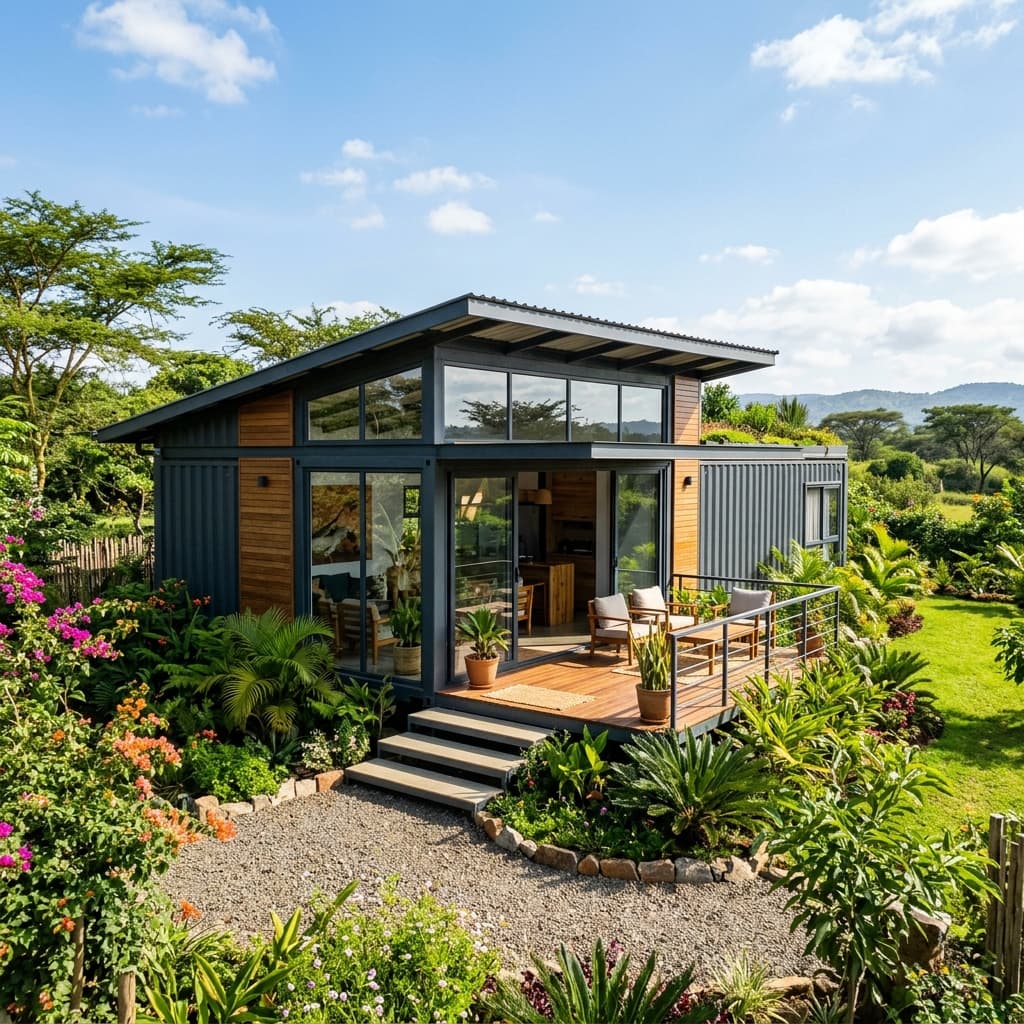 2 June 2025
How much does a container home cost in Kenya?
Dreaming of a unique, affordable, and stylish home in Kenya? A container home could be your answer! Shipping containers are strong, eco-friendly, and can be transformed into beautiful living spaces. But how much does a container home cost in Kenya?
Read Article