Container Classrooms & Schools in Kenya 2026: Cost & Complete Guide
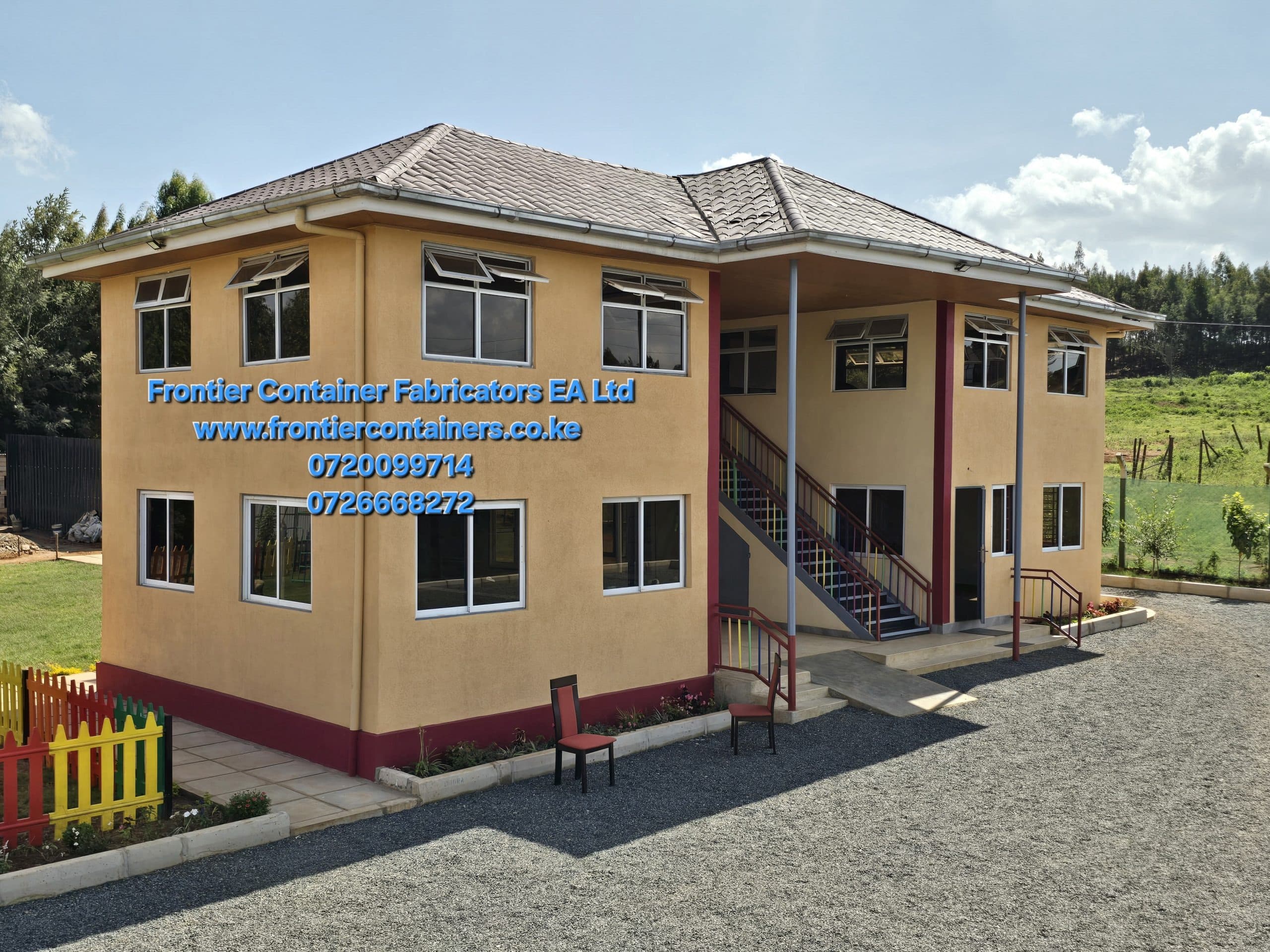
Kenya's education sector is facing a persistent classroom shortage — in rural areas, peri-urban zones, and rapidly growing estates. Container classrooms have emerged as the fastest, safest, and most cost-effective solution for schools, churches, NGOs, CBOs, and county governments that need to add learning spaces quickly without waiting years for conventional construction funds.
Need an exact quote? Call us now.
We answer container questions 24/7.
Why Container Classrooms Are Kenya's Fastest-Growing Education Solution
The demand for classrooms in Kenya is enormous. With over 10 million primary school pupils and classroom-to-pupil ratios that are among the most stretched in Africa, any solution that delivers quality learning spaces quickly is welcomed.
Container classrooms address the key bottlenecks:
Speed: A container classroom can be designed, fabricated, delivered, and ready for pupils in as little as 3 weeks. A conventional brick classroom takes 6–18 months from design to completion — and often longer when funding is delayed.
Cost: A properly fitted container classroom costs Kshs 610,000–900,000. A brick classroom with equivalent specifications (ventilation, lighting, security) in Kenya costs Kshs 800,000–1,500,000 and takes far longer to complete.
Durability: Steel containers are more resistant to fire, water damage, and vandalism than brick or timber structures. With proper surface treatment and painting, a container classroom lasts 25+ years.
Expansion: As enrolment grows, a school can add one container classroom at a time — no need to plan and fund a large construction project.
Who Is Using Container Classrooms?
Church-Based Schools: Many of Kenya's most impactful primary schools were started by churches in underserved areas. Container classrooms allow them to expand quickly without the capital for brick construction. We have worked with Catholic, Anglican, PCEA, and Pentecostal schools across Kenya.
CBOs and NGOs: Community-based organisations running adult literacy, Early Childhood Development (ECD), and informal schools in slum areas are major users of container classrooms. They are affordable, can be donated or funded in phases, and are quick to deploy.
County Governments: Several county governments — including Nairobi, Machakos, Kakamega, and Kisumu — have used container classrooms to quickly address classroom shortages in public schools while waiting for CDFF-funded brick construction.
Private School Owners: Growing private schools that need additional classrooms for new streams use container classrooms as a fast, affordable way to increase capacity without the disruption of a full construction project.
Corporate CSR Programs: Companies fulfilling their Corporate Social Responsibility commitments regularly fund container classrooms — they are fast, visible, and photogenic for CSR reports.
Child-Friendly Design Features
A container classroom for children must meet specific safety and comfort standards. At Frontier Containers, our school fit-out includes:
Rounded edges and corners: All interior steel edges are ground smooth and capped with rubber or plastic extrusions to prevent injury from accidental contact.
Proper ventilation: Education regulations require good air circulation. We install louvre windows along both long sides of the container, a ridge ventilator, and optionally a low-energy fan. This creates cross-ventilation that keeps temperatures comfortable without AC.
Adequate natural light: Large aluminium framed windows on both sides of the classroom provide good natural light. We also fit LED strip lighting for cloudy days and morning/evening use.
Child-appropriate door hardware: Door handles, locks, and window winders are all at child-accessible heights. We avoid sharp protrusions and exposed bolts.
Non-slip flooring: We lay anti-slip vinyl tiles or ceramic tiles — not bare steel — for safety.
Blackboard/whiteboard wall: A full-width teaching surface (blackboard or porcelain whiteboard) is fixed to one end wall.
Noise reduction: Our insulation package reduces exterior noise intrusion, helping concentration in learning environments.
Classroom Layout and Capacity
20ft Container Classroom (approx. 14 sq.m usable area) Can comfortably seat 20–25 pupils with standard desks. Ideal for ECD/nursery classes where smaller group sizes are beneficial. Also suitable for specialist rooms — computer lab, library, or art room.
40ft Container Classroom (approx. 30 sq.m usable area) The standard choice for primary school classrooms. Comfortably seats 30–40 pupils in two-to-a-desk configuration — the standard in Kenyan primary schools. Includes teacher's area at the front, full blackboard, and storage space.
Connected Classrooms: Two 40ft containers placed side by side with an internal connecting door create a large classroom or can be used as two separate classes sharing a teacher's prep room. We can also connect classrooms with a covered steel walkway.
Block Configuration: Three or four containers arranged in an L or straight row with a shared veranda (steel canopy) creates a proper classroom block. We include a gutter and downpipe system to channel roof water away.
Compliance and Safety Standards
Container classrooms in Kenya should comply with the following:
MoE Guidelines: The Ministry of Education Kenya sets standards for classroom area per pupil, ventilation, lighting, and sanitation. Our 40ft classrooms meet these standards for classes of up to 40 pupils.
NEMA: Environmental impact is minimal for a single or small cluster of container classrooms. Larger school projects may require a brief environmental assessment.
Fire Safety: We install at least one ABC fire extinguisher per classroom and ensure all classrooms have an unobstructed exit. Steel construction is inherently fire-resistant.
Structural Safety: Containers are rated to international ISO standards for structural loading. We provide a structural certificate for each unit, which is typically required by county education officers.
Funding and Procurement for Schools
Many organisations ask: how do we fund a container classroom? Several pathways are available:
School fees phased investment: A primary school charging Kshs 3,000/term × 40 pupils × 2 terms = Kshs 240,000/year can save for a container classroom over 2–3 years while fundraising the balance.
NG-CDF funding: The National Government Constituencies Development Fund (NG-CDF) regularly funds classroom construction. Container classrooms qualify and are fast to procure under NG-CDF procurement rules.
County government budgets: CDFF and county education budgets can include container classroom procurement.
NGO/donor grants: Many international NGOs (Plan International, World Vision, Aga Khan Foundation) fund classroom construction in Kenya. Container classrooms are increasingly preferred for their speed and accountability.
Corporate CSR: We have worked with banks, telecoms, and energy companies to deliver container classrooms as part of their CSR programmes. We can provide full documentation, photos, and completion certificates for CSR reporting.
Container Classroom Prices in Kenya (2026)
Prices include delivery within Nairobi. Upcountry delivery charged separately. Fit-out levels can be adjusted based on budget. All prices inclusive of VAT.
💡 These are indicative ranges. Call us for your exact quote: 0715 557 559
Frequently Asked Questions
How fast can a container classroom be ready?+
A single container classroom can be designed, fabricated, delivered, and installed in 2–3 weeks from order confirmation. A three-classroom block takes 4–5 weeks. This is dramatically faster than the 6–18 months for conventional brick construction.
How many pupils can fit in a container classroom?+
A 40ft container classroom (approx. 30 sq.m) comfortably seats 30–40 pupils using standard two-seater school desks, which is the norm in Kenyan primary schools. A 20ft container seats 20–25 pupils, making it ideal for ECD and nursery classes.
Are container classrooms safe for children?+
Yes, when properly fitted out. We grind all interior steel edges smooth and fit rubber/plastic edging on exposed corners. We use child-appropriate door hardware, non-slip flooring, and ensure all windows have secure but openable latches. The steel structure is more resistant to fire and structural collapse than many timber or brick-and-mortar alternatives.
Will a container classroom be hot inside?+
Not if properly ventilated and insulated. We install louvre windows on both sides for cross-ventilation, a ridge ventilator, and PIR insulation on the ceiling. In Kenya's highland climate (Nairobi, Nakuru, Eldoret), this is sufficient. For coast and low-altitude areas, we add a split-unit AC.
Can we get NG-CDF funding for container classrooms?+
Yes. Container classrooms qualify for NG-CDF funding. We have worked with multiple constituency offices on funded classroom projects. We can supply all required documentation — structural certificates, warranties, and completion reports — for NG-CDF compliance.
Do container classrooms comply with Ministry of Education standards?+
Our 40ft classrooms meet MoE standards for floor area per pupil, ventilation, natural lighting, and sanitation requirements. We can provide a compliance letter with each delivery if required by county education officers.
Can the classroom be painted in the school's colours?+
Yes. We paint the exterior in any colour combination — most schools choose their uniform colours. We can also apply the school name, motto, and logo. The interior is typically painted white or a light pastel colour for maximum light reflection.
Ready to Buy?
Call or WhatsApp us for pricing on any container product in Kenya.
Related Guides
Container Guides & Insights
Expert advice on prices, buying, and building with shipping containers across Kenya.
 24 May 2025
How Much is the Cost of Used Shipping Container in Kenya
Are you thinking about buying a used shipping container in Kenya? It’s a smart move for many needs, from storage to building unique spaces. But the first question on everyone’s mind is: “How much will it cost?” Read on to find out.
Read Article 24 May 2025
How Much is the Price for a 40ft Shipping Container in Kenya?
Are you looking to buy a 40ft shipping container in Kenya? This is a popular choice for many projects, from big storage needs to building spacious container homes or offices. One of the first questions people ask is about the price.
Read Article 2 June 2025
How much does a container home cost in Kenya?
Dreaming of a unique, affordable, and stylish home in Kenya? A container home could be your answer! Shipping containers are strong, eco-friendly, and can be transformed into beautiful living spaces. But how much does a container home cost in Kenya?
Read Article