Container Home Floor Plans Kenya: Every Layout Explained (2026)
Container homes are defined by the containers they use — and each container configuration creates a completely different floor plan, feel, and lifestyle. From a compact single-unit studio to a sweeping U-shape compound with a courtyard, this guide walks you through every practical layout available in Kenya: dimensions, container counts, what rooms fit, and real cost ranges. Use this as your starting point before calling us for a detailed design consultation.
Need an exact quote? Call us now.
We answer container questions 24/7.
Understanding Container Dimensions: The Building Blocks
Before exploring layouts, you need to know the dimensions you are working with. In Kenya, container homes are almost exclusively built from 40ft High Cube and 20ft standard containers:
20ft Standard Container: - External: 6.06m long × 2.44m wide × 2.59m tall - Interior: 5.90m × 2.35m × 2.39m - Usable floor area: ~13.9 sqm - Best for: Bedsitters, studio units, secondary rooms, extensions
40ft High Cube Container: - External: 12.19m long × 2.44m wide × 2.90m tall - Interior: 12.03m × 2.35m × 2.70m (HC adds 30cm extra height) - Usable floor area: ~28.3 sqm - Best for: 1BR homes, apartment-style living, core units in larger configurations
When you combine multiple containers and add connector sections, covered walkways, or bridging structures, the total floor area increases beyond the sum of individual containers. A skilled designer can extract 20–40% more usable space from connector zones.
Layout 1 — Single Unit Studio (20ft or 40ft)
Container count: 1 × 20ft OR 1 × 40ft Floor area: 14 sqm (20ft) or 28 sqm (40ft) Best for: Bedsitter, studio flat, single professional, caretaker unit
The simplest layout — one container, one rectangular room divided into zones:
20ft Studio (14 sqm): - Zone 1 (front half): Kitchen and dining — kitchenette unit along one wall, small dining table - Zone 2 (middle): Living space — loveseat or fold-down wall sofa - Zone 3 (rear): Sleeping area — single or double bed, wardrobe - Bathroom: 1.5m × 1.5m wet room at one end, fully tiled
40ft Studio / 1BR (28 sqm): - Zone 1 (front): Open-plan kitchen + living room — full kitchen unit, sofa, dining for 2–4 - Zone 2 (rear): Bedroom — 5×6 bed, wardrobe, bedside table - Bathroom: 1.8m × 2.0m between living and bedroom zones - Can include a hallway vestibule at the entrance
Indicative cost range: Kshs 550,000–850,000 (20ft) | Kshs 900,000–1,400,000 (40ft complete)
Orientation tip: Position the long side of the container facing the street (parallel to the road) for maximum window coverage and better natural ventilation. The 40ft container's 12-metre length means you can have 3–4 windows along each side.
Layout 2 — Side-by-Side 2-Bedroom (Two 20ft or Two 40ft)
Container count: 2 × 20ft OR 2 × 40ft Floor area: ~28 sqm (two 20ft) or ~50 sqm (two 40ft) Best for: 2-bedroom family home, two-unit rental property
Two containers are placed parallel to each other, separated by a gap of 0.5–2 metres. A bridging roof and connector wall close the gap, creating a central corridor or shared zone.
Two 20ft side-by-side (28 sqm total): - Container A (14 sqm): Bedroom 1 + bathroom - Container B (14 sqm): Bedroom 2 + kitchenette/living area - Connector (gap, ~6 sqm): Hallway or dining area under shared roof - Good for: Two self-contained units that can be rented separately or used together
Two 40ft side-by-side (50 sqm + 5–10 sqm connector = ~55–60 sqm): - Container A (28 sqm): Two bedrooms + bathroom - Container B (28 sqm): Open-plan kitchen + living room + storage - Connector (8–10 sqm): Central hallway linking both containers, often used for a second bathroom - This is the most common layout for a spacious 2-bedroom family home
Indicative cost range: Kshs 1,400,000–2,200,000 (two 20ft or two 40ft, complete)
Plot tip: Two 40ft containers side by side have a combined width of approximately 5.2 metres plus the connector gap. On a 15-metre-wide plot (50 feet), this leaves ample setback space on both sides.
Layout 3 — Stacked Two-Storey (Two or Four Containers)
Container count: 2 × 40ft (one storey each) OR 4 × 40ft (two per storey) Floor area: ~56 sqm (two containers) or ~120 sqm (four containers) Best for: Maximising floor area on a small plot, dramatic modern aesthetic, upper-floor views
Stacking containers is structurally very sound — they are engineered for it. The key additions are:
- Internal staircase: Steel frame with timber treads, fabricated in the workshop and installed during assembly. Occupies ~2.5 sqm
- Balcony or outdoor landing on the upper level: Glass or steel balustrade required
- Reinforced foundation: Full reinforced concrete slab or steel I-beam subframe (stronger than standard piers)
Two-storey, two-container layout (ground floor: kitchen/living/bathroom; upper floor: two bedrooms): - Ground floor container: Entrance, open-plan kitchen and living room, guest WC, staircase - Upper floor container: Master bedroom with en-suite, second bedroom, family bathroom - Small balcony at the upper front: Overlooking the garden or street
Two-storey, four-container layout (two per floor): - Ground floor: Living room, dining room, kitchen, bathroom, utility room (60+ sqm) - Upper floor: Master bedroom with en-suite, 2–3 bedrooms, family bathroom (60+ sqm) - Rooftop access: Optional rooftop deck on the upper container tops
Indicative cost range: Kshs 2,800,000–5,000,000 (two-container two-storey) | Kshs 5,000,000–8,000,000 (four-container two-storey luxury)
Structural note: Any stacked build requires a structural engineering certificate for the county building permit.
Layout 4 — L-Shape Configuration
Container count: 2–4 containers Floor area: 50–120 sqm Best for: 3–4 bedroom family home, visual interest, natural courtyard effect
The L-shape is formed by two or three containers where one runs at a 90° angle to the others. The inside of the L creates a natural semi-enclosed outdoor zone — perfect for a covered patio, vegetable garden, or children's play area.
Standard L-shape (two 40ft containers, 90° junction): - Long arm: 12m container — two bedrooms + bathroom at one end, living and kitchen at the other - Short arm: 12m container (perpendicular) — third bedroom + utility room + optional home office - L junction: Glass roof or solid roof over the inside corner creates a sheltered outdoor room - Overall footprint: ~14m × 12m (fits on a 50×100 plot with space to spare)
Large L-shape (three 40ft containers): - Two containers form one arm; one container forms the other - Four bedrooms, two bathrooms, large open-plan living/kitchen zone - Inside corner courtyard (~25 sqm): Ideal for outdoor kitchen, braai area, or pool (if budget allows)
Indicative cost range: Kshs 2,500,000–4,500,000 (2–3 container L-shape, complete)
Visual tip: The L-shape is the most photographed container home layout in Kenya because the corner junction creates an interesting roofline and visual depth. External cladding on the outside of the L dramatically lifts the kerb appeal.
Layout 5 — U-Shape Compound
Container count: 3–4 containers Floor area: 75–150 sqm Best for: Large family, upscale residential, Airbnb or hospitality use
Three containers form three sides of a U, enclosing a central courtyard that can be landscaped, paved, or even fitted with a small pool. This is the most prestigious container home layout in Kenya.
Standard U-shape (three 40ft containers): - Left wing: Master bedroom with en-suite + bedroom 2 - Back section: Kitchen, dining, living room — the social heart of the home - Right wing: Bedrooms 3 and 4 + family bathroom + utility room - Central courtyard (~35 sqm): Enclosed garden, paved entertainment area, or future pool zone
Large U-shape (four containers): - More generous room sizes throughout - Can accommodate a separate home office, gym room, or larger utility space - Courtyard (~50 sqm) large enough for a plunge pool
Plot requirement: A U-shape layout requires at least a 25m × 20m footprint. A standard 50×100 plot (30m × 15m) is tight — a 100×100 plot gives the best results.
Indicative cost range: Kshs 4,000,000–7,500,000 depending on specification and courtyard fitout
How to Choose the Right Layout for Your Plot
With so many layout options, here is a practical decision guide:
- Plot 50×100 ft (standard Nairobi plot) → Best layouts: Single unit, side-by-side 2BR, L-shape (2 containers), two-storey (2-container)
- Plot 100×100 ft → Best layouts: L-shape (3 containers), U-shape, two-storey (4-container)
- Plot 50×200 ft (long and narrow) → Best layouts: Linear side-by-side, stacked two-storey
- Rural plot (1/8 acre or more) → Any layout works; focus on orientation for wind and sun
Key orientation principles: - Long container sides facing north/south = maximum diffused light, minimum direct sun on glass - Main entrance facing the access road = security and convenience - Kitchen ventilation outlet facing away from prevailing wind direction - Bedroom windows avoid direct west-facing (afternoon sun and privacy issues)
Call us for a free site assessment — we visit your plot, assess the soil type, note the access point and neighbouring structures, and recommend the optimal layout and container orientation.
Floor Plan Cost Guide — Container Homes Kenya 2026
Indicative complete project costs. Exact quotes depend on finish level, plot location, and foundation type.
💡 These are indicative ranges. Call us for your exact quote: 0715 557 559
Frequently Asked Questions
What is the most popular container home layout in Kenya?+
The L-shape configuration using two or three 40ft containers is the most popular in Kenya. It creates a natural courtyard effect, has excellent curb appeal, fits on a standard 50×100 plot, and accommodates 3–4 bedrooms comfortably.
How do I choose the right number of containers for my home?+
Start with your bedroom requirement: 1BR needs one 40ft container, 2BR needs two 40ft containers, 3BR needs two or three, and 4BR needs three or four. Then consider your plot size, budget, and whether you want ground level or two-storey.
Can I see floor plan drawings before committing?+
Yes. Frontier Containers provides preliminary layout drawings as part of the consultation process. For serious buyers, we provide full architectural drawings for permit purposes.
What is the minimum plot size for a container home?+
A single container bedsitter or 1BR home can fit on a 30×60 ft plot. A 2BR side-by-side fits on a standard 50×100 ft plot. L-shape 3BR and U-shape layouts work best on 50×100 ft or larger.
Can I mix container sizes in one home?+
Yes. Mixing 20ft and 40ft containers is a common design technique. For example, two 40ft containers for the main living areas and one or two 20ft containers as bedroom annexes or a utility wing.
Do the connector sections between containers feel like normal rooms?+
Yes. Connector sections are fully insulated, have their own ceiling, flooring, and lighting, and are built to the same standard as the main container rooms. When finished, you cannot tell where the container ends and the connector begins.
Can I start with one container and add more later?+
Absolutely. Container homes are modular by nature. Many clients start with a single 1BR or 2BR and add containers as finances allow. We plan the initial foundation and utility connections to accommodate future expansion.
Ready to Buy?
Call or WhatsApp us for pricing on any container product in Kenya.
Related Guides
Container Guides & Insights
Expert advice on prices, buying, and building with shipping containers across Kenya.
 24 May 2025
How Much is the Cost of Used Shipping Container in Kenya
Are you thinking about buying a used shipping container in Kenya? It’s a smart move for many needs, from storage to building unique spaces. But the first question on everyone’s mind is: “How much will it cost?” Read on to find out.
Read Article 24 May 2025
How Much is the Price for a 40ft Shipping Container in Kenya?
Are you looking to buy a 40ft shipping container in Kenya? This is a popular choice for many projects, from big storage needs to building spacious container homes or offices. One of the first questions people ask is about the price.
Read Article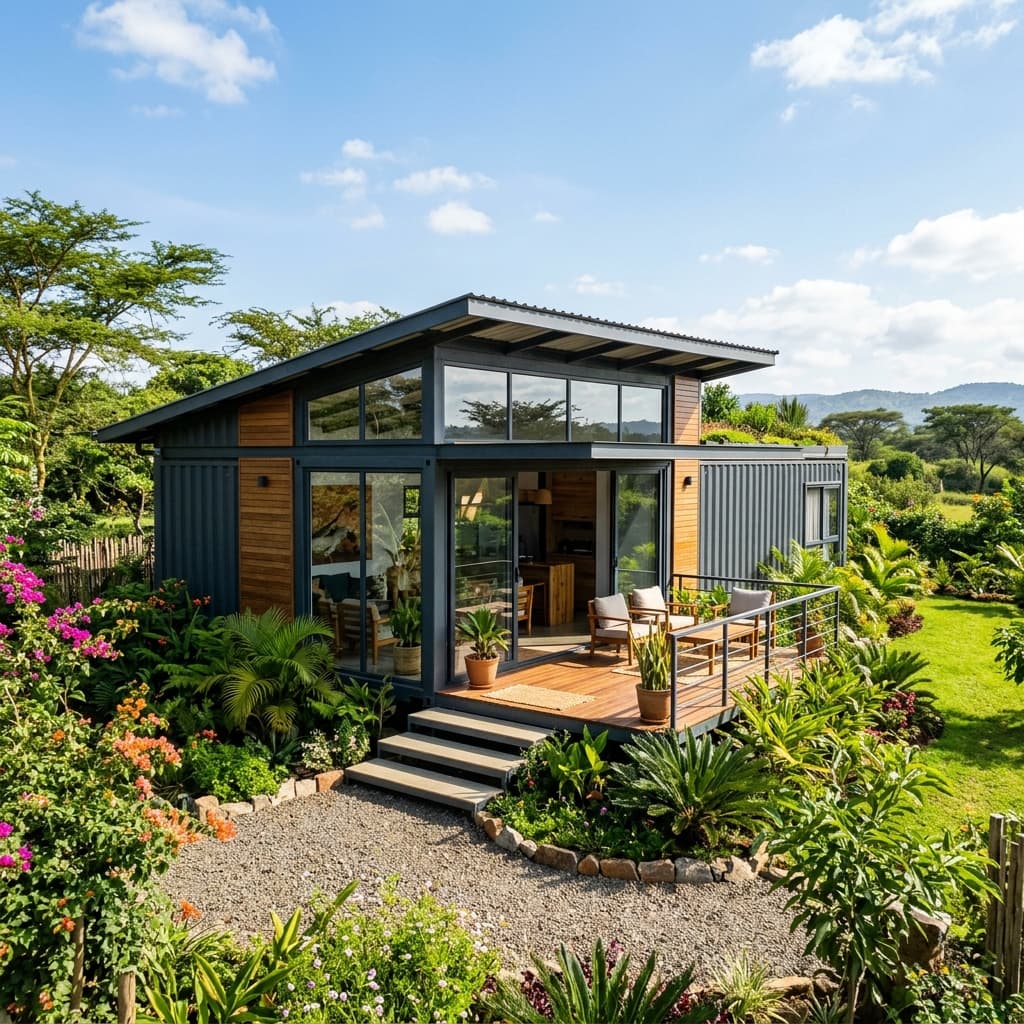 2 June 2025
How much does a container home cost in Kenya?
Dreaming of a unique, affordable, and stylish home in Kenya? A container home could be your answer! Shipping containers are strong, eco-friendly, and can be transformed into beautiful living spaces. But how much does a container home cost in Kenya?
Read Article