How Long Does a Shipping Container Last? (Kenya & Global Guide)
Shipping containers are among the most durable man-made structures in the world. Built from Corten weathering steel, they are engineered to survive the harshest maritime environments on earth — decades of saltwater spray, tropical sun, sub-zero temperatures, and the mechanical stress of being loaded, lifted, and stacked over and over. This guide tells you exactly how long containers last, what causes premature failure, and what a container home owner in Kenya can expect over the long term.
Need an exact quote? Call us now.
We answer container questions 24/7.
What Makes a Shipping Container So Durable?
Shipping containers are built from Corten steel — a high-strength, low-alloy steel formally known as weathering steel. Corten is specifically engineered to form a stable, protective rust patina on its surface when exposed to oxygen and moisture. This patina layer (which looks like light rust but is actually a dense oxide barrier) acts as its own protective coating, slowing further corrosion dramatically.
Key properties of Corten steel: - Tensile strength: 470 MPa (versus ~250 MPa for ordinary mild steel) - Corrosion resistance: 4–8 times more corrosion-resistant than ordinary carbon steel in most environments - Yield strength: 355 MPa — very high resistance to bending and deformation
Structural design: The box structure of a shipping container is a masterpiece of practical engineering. The corrugated steel walls act as a stressed skin — the corrugations dramatically increase rigidity without increasing steel weight. The 4 corner posts carry the full stacking load; each post is rated for 9 fully loaded containers stacked above it. The floor consists of hardwood (Kwila) or bamboo boards on steel cross-members.
This combination of high-grade steel, efficient geometry, and quality construction is why containers are so durable.
Container Lifespan: At Sea vs On Land
At sea (active shipping use): A shipping container in active maritime service is typically retired by shipping lines after 10–15 years of commercial use. This is not because the container has failed — it is because the cargo operator's maintenance and certification standards are very high and the cost of continuing to certify an older container increases.
At 10–15 years of sea service, most retired containers are structurally sound with surface rust, minor dents, and worn paint — but no structural failure.
On land (storage, homes, offices): Once a container comes off sea service and is placed on land, its deterioration rate slows dramatically: - No more saltwater spray (the primary accelerant of marine corrosion) - No more mechanical loading and unloading (which contributes to wear on hinges and floor) - Stable foundation (instead of ship deck movement)
On land with basic maintenance (paint upkeep and drainage management), Corten steel containers commonly last 30–50 years and beyond. There are documented examples of containers in service for 40+ years still meeting cargo standards.
Container homes specifically: A container home has even better prospects than a container in continued storage use, because: - The exterior is painted with dedicated anti-corrosion systems (not just factory paint) - The home is inhabited and therefore regularly observed for defects - The interior is insulated and climate-controlled, preventing internal condensation
A realistically maintained container home built from a 10-year-old sea-service container has a useful structural life of 40–60 years from the point of home conversion.
Real-World Examples: How Old Are Kenya's Containers?
Kenya has used shipping containers as buildings for several decades. Here are real patterns we observe in our container procurement:
20-year-old containers still in service: Commonly encountered in the Mombasa and Nairobi container depots. These containers, retired from sea service around 2005–2010, are structurally sound and suitable for home conversion. They need thorough surface treatment, possible floor board replacement, and fresh paint — but their steel frames are undamaged.
30-year-old containers: Less common but not rare. These represent early-1990s manufacture and sea service. Most have surface rust on lower panels but intact corner posts, roof, and floor frame. With proper treatment, these can serve another 20–30 years as static structures on land.
What our container inspectors look for: When we source containers for home builds, we reject any container with: - Rust holes through the wall panels (structural breach) - Cracked or deformed corner castings (compromised stacking capacity) - Floor boards with rot through more than 50% of their area - Evidence of chemical contamination (discolouration, residual odour)
The containers we accept have cosmetic or surface issues only. These are structurally equivalent to new containers for a static home application.
What Causes Premature Container Failure?
Most container "failures" are preventable and follow predictable patterns:
1. Surface rust ignored over many years: Surface rust (paint failure + oxidation of the surface steel layer) is easy and cheap to treat if caught early. A 1mm rust patch takes 20 minutes and Kshs 300 to fix. Left for 5–10 years, it penetrates through the 2mm panel steel, creating a hole that requires plate replacement at Kshs 15,000–40,000 per panel.
2. Water pooling on the roof: A container roof has a natural crown (slight curve side-to-side) that encourages runoff. Physical dents from machinery can create depressions that pool rainwater. Pooled water stays in contact with steel for extended periods, accelerating rust. Check and repair roof dents before they become rust holes.
3. Ground contact at the base: If soil, vegetation, or debris builds up against the lower panel of the container, constant moisture contact rapidly accelerates base corrosion. Maintain at least 150mm of clearance between the container base and the ground.
4. Interior moisture without ventilation: In a sealed container used for storage (not a home), moisture condenses on cold steel surfaces, causing rust from the inside out. Container homes with proper insulation and ventilation do not have this problem.
5. Chemical contamination: Containers that carried corrosive chemicals have accelerated rust on the floor and lower panels. This is why food-grade containers are mandatory for home conversion — they were never exposed to damaging cargo.
6. Physical impact damage: Forklift strikes, stacking accidents, or vehicle impacts cause localised steel deformation. A dented panel is weaker and may trap water. Significant impacts should be assessed and repaired.
How to Maximise Your Container Home's Lifespan
The five maintenance practices that most extend container home life:
1. Keep the paint coat intact: Paint is the primary defence of your container's steel against oxidation. Annual inspection and spot repairs. Full repaint every 5–7 years (highlands) or 3–5 years (coastal). Use a two-coat system: rust-inhibiting primer + UV-resistant topcoat.
2. Maintain drainage: No standing water on the roof, no soil build-up against lower panels, no debris in gutters. Water is steel's primary enemy.
3. Seal all penetrations: Any hole made through the container shell for pipes, cables, or ventilation is a potential water ingress point. All penetrations should be sealed with exterior-grade silicone and inspected annually.
4. Keep ground clearance: The container base should always have at least 150mm clear gap above ground level. This prevents capillary moisture from reaching the lower panels and allows air circulation to dry after rain.
5. Act on early rust immediately: Small rust patches caught within the first year take minutes to treat. Ignored rust compounds rapidly — each year it is left, the repair cost multiplies.
A Frontier Containers client with a 10-year-old used container converted in 2020 and following these practices can realistically expect the structure to be in excellent condition in 2060 — 40 years of useful life from a container that had already served 10 years at sea.
Frequently Asked Questions
How long does a shipping container last?+
Shipping containers last 25–50+ years depending on use and maintenance. In active sea service, they are typically retired after 10–15 years for commercial reasons, not structural failure. On land as homes with proper maintenance, 40–60 years is realistic.
How long does a container home last in Kenya?+
A well-maintained container home in Kenya's highland climate should last 30–50 years from the time of home conversion. With the container often already being 10–15 years old at that point, the total container lifespan is 40–65 years.
Is a 20-year-old container safe to use as a home?+
Yes, if it passes a proper structural inspection. A 20-year-old container with intact corner castings, no rust holes, and a sound floor frame is perfectly suitable for home conversion. We inspect every container we source for homes and reject any with structural defects.
What is Corten steel and why is it special?+
Corten (weathering steel) is a high-strength alloy that forms a stable, protective rust patina on its surface when exposed to oxygen and moisture. This patina acts as its own barrier, preventing deeper corrosion. It is 4–8 times more corrosion-resistant than ordinary steel and significantly stronger.
What is the main cause of container rust?+
Paint failure followed by prolonged contact with moisture — particularly standing water on the roof, soil build-up against lower panels, or unsealed penetration holes. All of these are preventable with routine maintenance.
Can a container home last longer than a brick house?+
It is possible, especially in termite-active soils. Corten steel has structural advantages over brick in ground movement and pest resistance. A brick house with deteriorating foundation, rising damp, and termite-damaged roof timbers can fail structurally within 30–40 years, while a well-maintained container home is still sound at 50.
Ready to Buy?
Call or WhatsApp us for pricing on any container product in Kenya.
Related Guides
Container Guides & Insights
Expert advice on prices, buying, and building with shipping containers across Kenya.
 24 May 2025
How Much is the Cost of Used Shipping Container in Kenya
Are you thinking about buying a used shipping container in Kenya? It’s a smart move for many needs, from storage to building unique spaces. But the first question on everyone’s mind is: “How much will it cost?” Read on to find out.
Read Article 24 May 2025
How Much is the Price for a 40ft Shipping Container in Kenya?
Are you looking to buy a 40ft shipping container in Kenya? This is a popular choice for many projects, from big storage needs to building spacious container homes or offices. One of the first questions people ask is about the price.
Read Article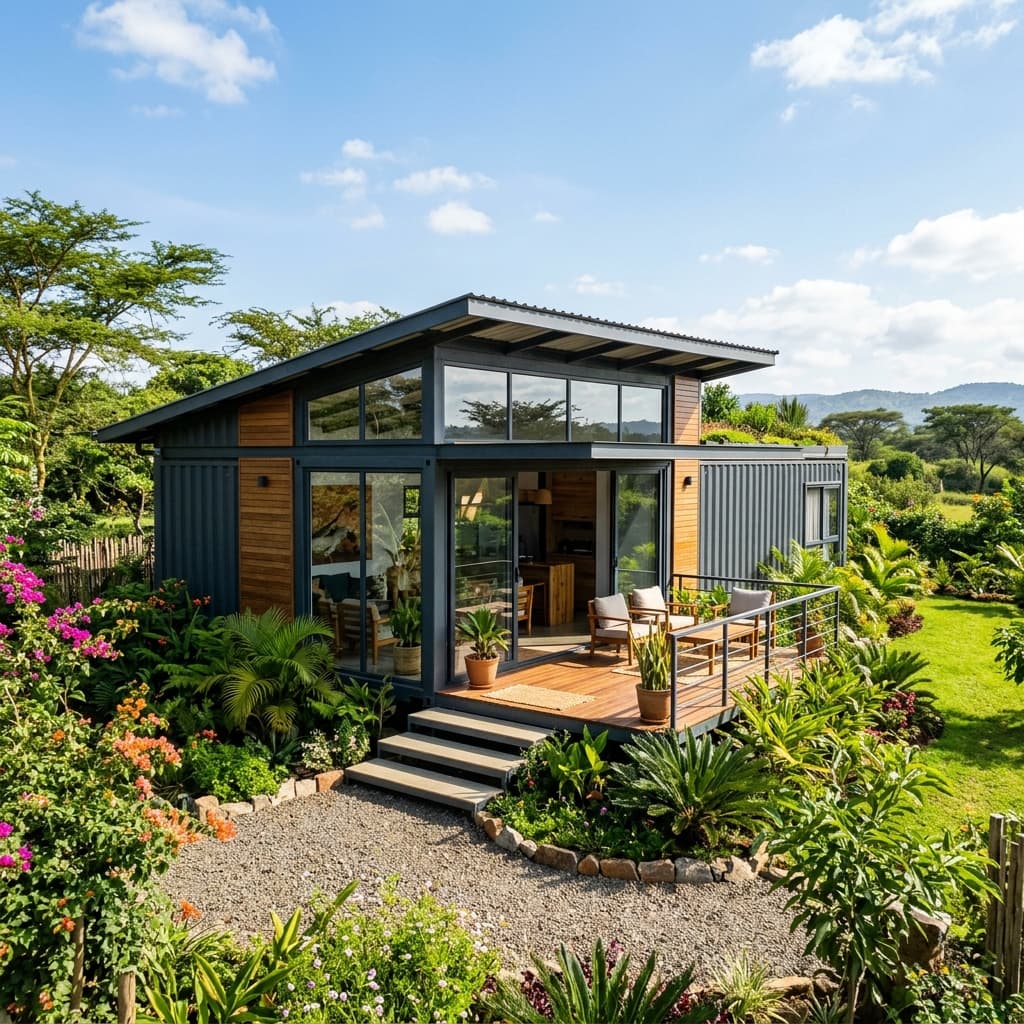 2 June 2025
How much does a container home cost in Kenya?
Dreaming of a unique, affordable, and stylish home in Kenya? A container home could be your answer! Shipping containers are strong, eco-friendly, and can be transformed into beautiful living spaces. But how much does a container home cost in Kenya?
Read Article